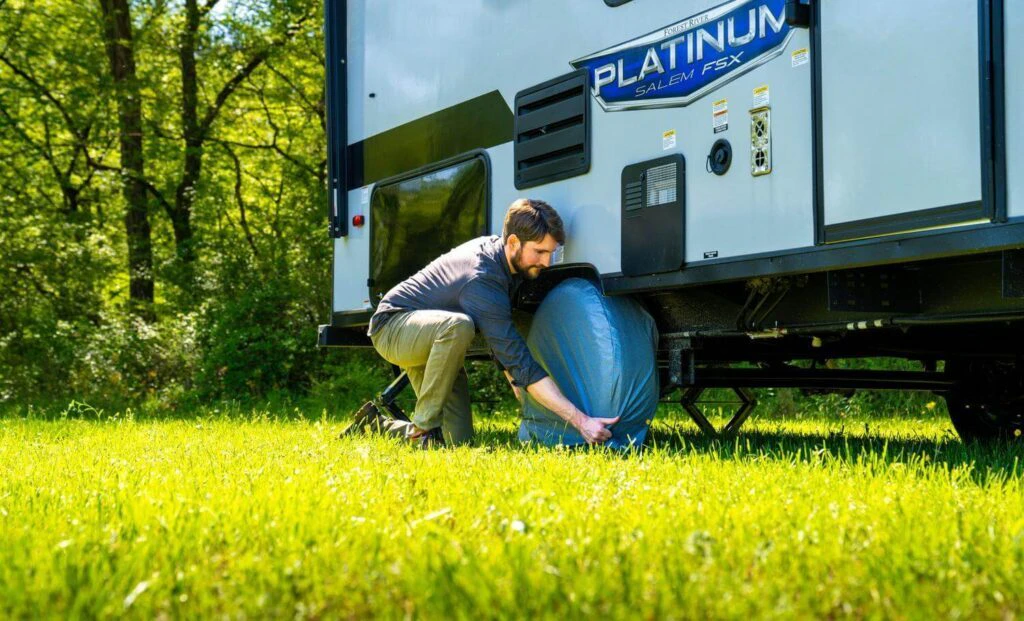
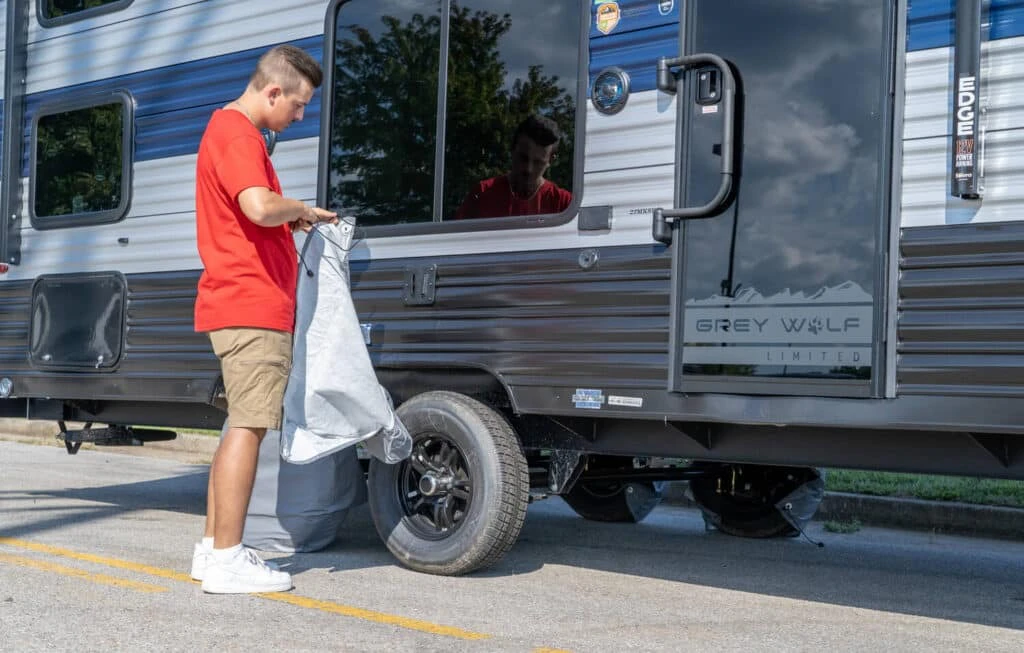
Why Do You Need Tire Covers?
Tires are one of the biggest investments on your RV, and even during downtime between trips they're taking on sun, weather, and time. Here's what actually damages them, and why a cover is such an easy way to protect that investment and ensure your safety when you're on the road.
UV Rays Break Down Rubber
Sunlight oxidizes the rubber compounds in a tire, drying them out from the outside in. This is what eventually shows up as sidewall cracking — long before the tread itself wears out.
Dry Rot Doesn't Announce Itself
A tire can look fine and still be failing internally. Weather checking and dry rot are the leading cause of blowouts on rigs that log low mileage but high sun exposure.
A Set of Tires Isn't Cheap
Replacing four to six RV tires early because of preventable weather damage is one of the more expensive "oops" moments in ownership — a cover costs a fraction of one tire.
Debris, Grime, & Pests
Parked tires collect road salt, tree sap, and pollen — and covers keep curious critters from nesting in your wheel wells over a long off-season storage stretch.
How to Choose The Right Cover
1. Measure before you shop
Wrap a tape measure around the tire's outer diameter (edge of tread to edge of tread, straight across) rather than guessing from tire size numbers. Most covers are sold by a diameter range, so getting this right avoids a loose, flapping fit.
Do this first!
2. Decide single covers vs. a dual-axle wrap
Class A and larger trailers with tandem or triple axles often do better with one continuous cover over the whole wheel set, instead of individual covers that can gap in between and let sun through the seams.
3. Pick a fabric built for the job
Materials generally trade off between toughness and flexibility — think heavy-duty vinyl on the rugged, weatherproof end, and spandex/Lycra blends on the snug, stretch-to-fit end. Whatever you land on, look for UV-rated or UV-treated fabric specifically — "weatherproof" alone doesn't guarantee sun protection.
4. Check how it actually stays on
Fit is everything — the best RV tire covers fully enclose the sidewall and tread with no gaps. Elastic hems are the easiest to install — just stretch and go — but they tend to loosen up over a season or two of use. Adjustable straps let you cinch a tighter, more custom fit and hold up well to wind. Drawstring-and-buckle closures split the difference, giving a secure hold that's still quick to put on and take off.
5. Match color to climate, not just style
Lighter covers (white, tan, silver) reflect heat and are the better choice in hot, sun-heavy climates. Dark covers hide grime well but absorb more heat sitting in direct sun.
Quick Pre-Checkout Checklist
Before you add a set to cart, confirm it covers these bases.
- Diameter range covers your actual measurement, with a little slack
- UV-resistant coating or UV-rated fabric, not just "weatherproof"
- Closure style you can actually reach on your axle setup
- Sold as a set of 4 (or however many axles you have)
- Color suited to your climate, not just what looked best online
Getting the Most Life out of Your Tires
Tip 1: Put them on before you park
Cover tires as soon as you're set up at a site or back in the driveway — not after they've already had a few sunny days exposed.
Tip 2: Let them dry before storing
Rinse off dirt and let both the tire and cover fully dry before folding it away, so mildew doesn't set in inside the bag.
Tip 3: Rotate & look at your tires
Covers reduce damage, they don't erase the need to check tread and pressure — take a peek every few weeks even while covered.